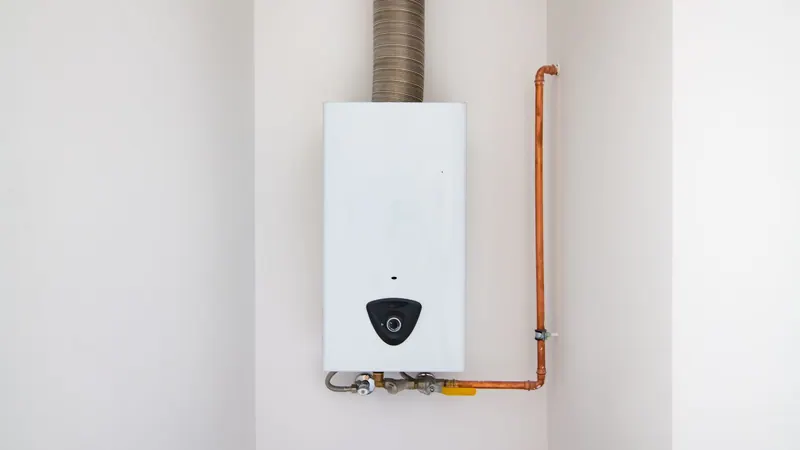
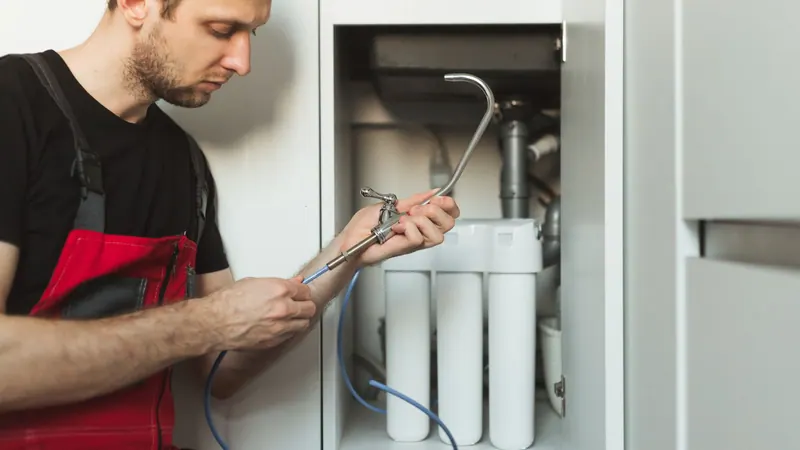
Water Heater Replacement
Old, leaking or undersized water heater? We remove it, install a properly sized new tank and haul the old one away.
Water Heater Replacement details
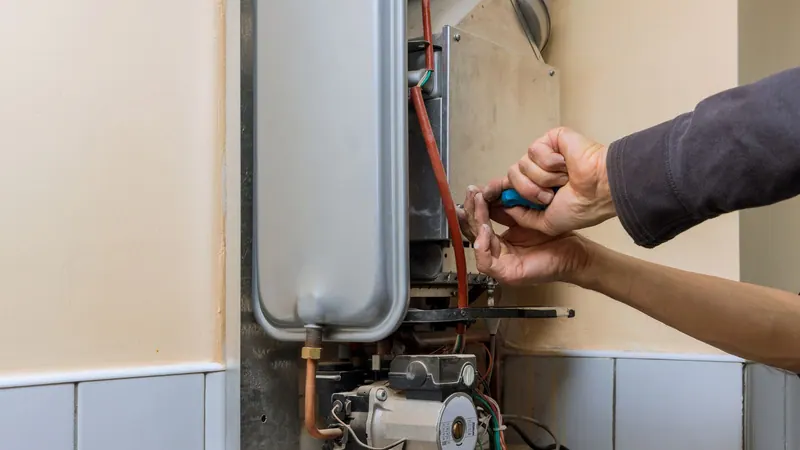
We find the part that actually failed, repair it when the heater has life left, and tell you plainly when it does not. Tank and tankless units, day or night.
Quick answer: If the tank itself is sound, most problems can be repaired. Failed elements, thermostats, relief valves, dip tubes and anode rods are all replaceable parts. If the tank is leaking from the body or rusted through at the bottom, it cannot be fixed and needs to be replaced. Age matters too: a heater past about 10 to 12 years is often a better candidate for replacement than repair.
Most water heater failures come down to a handful of parts: heating elements and thermostats on electric tanks, the anode rod, the dip tube, the temperature and pressure relief valve, the drain valve and the controls. Sediment from hard water settles at the bottom of the tank, makes popping noises and cuts the amount of hot water you get. Many of these problems are repairable, and replacing one failed part on a heater with years left in it is usually the right call. Our technicians test each component instead of guessing and explain what failed in plain language.
Sometimes the honest answer is that the tank itself is leaking. A steel tank that is weeping at the seams or rusting at the base cannot be patched, and money spent on parts is wasted. When that is the case we show you what we found and give you an upfront quote for repair and for replacement so you can decide. We also check the venting, the expansion tank and the shutoff valve, because a heater in a tight basement corner is often surrounded by old pipe that deserves a look.

On the phone we ask the age, type and brand of the heater and what you are noticing. That tells us which parts to bring and whether there is a safety issue, such as a leaking tank or a relief valve discharging, that needs attention right away.
On site we check power, thermostats, elements, the anode rod, dip tube, relief valve and tank condition. On tankless units we read error codes and check flow and scale. We find the cause rather than swapping parts until something works.
We explain what failed and whether repair is worth it given the heater's age and condition. You get an upfront quote before work starts. If replacement makes more sense, we price that too, so you are choosing with real numbers in front of you.
We make the repair, refill and purge the tank, check for leaks and confirm the heater reaches temperature. We clean up the work area and give you simple tips, like flushing sediment, to help the heater last longer in hard water.
Hard water is common across the Philadelphia region, and it is tough on water heaters. Minerals drop out of the water as it heats and build a layer of sediment on the bottom of the tank. That layer insulates the water from the heat source, wastes energy, makes the popping sound homeowners describe and speeds up corrosion. In tankless units the same minerals scale the heat exchanger. Regular flushing helps, and in many homes a water softener makes a real difference in heater life. We often find that a heater only five or six years old already has a thick sediment layer, which is why flushing matters here.
Location matters too. In a typical rowhome the heater sits in a cramped basement corner, often next to old galvanized supply pipe and a cast iron stack, with little room to work. In Levittown and other slab homes it lives in a first floor utility closet, where a leak goes straight onto finished flooring. We work carefully in tight spaces and check the surrounding pipe so a repair does not uncover the next problem. Either way, we protect the floor, keep the mess contained and clean up before we leave.
The cost of water heater repair depends on which part failed, the type and brand of heater and how easy it is to reach. Swapping a thermostat or element is quicker than replacing a seized drain valve or a corroded anode rod. Tankless repairs depend on the error and how much scale is in the heat exchanger. A heater wedged into a tight rowhome basement or utility closet can take more time. We test first, explain the options and give you an upfront quote before any work starts.
Call (518) 776-7838 for an upfront quote. We answer 24/7 and explain the price before any work starts.
No stock photos here. These are our own technicians, our own equipment and real repairs.

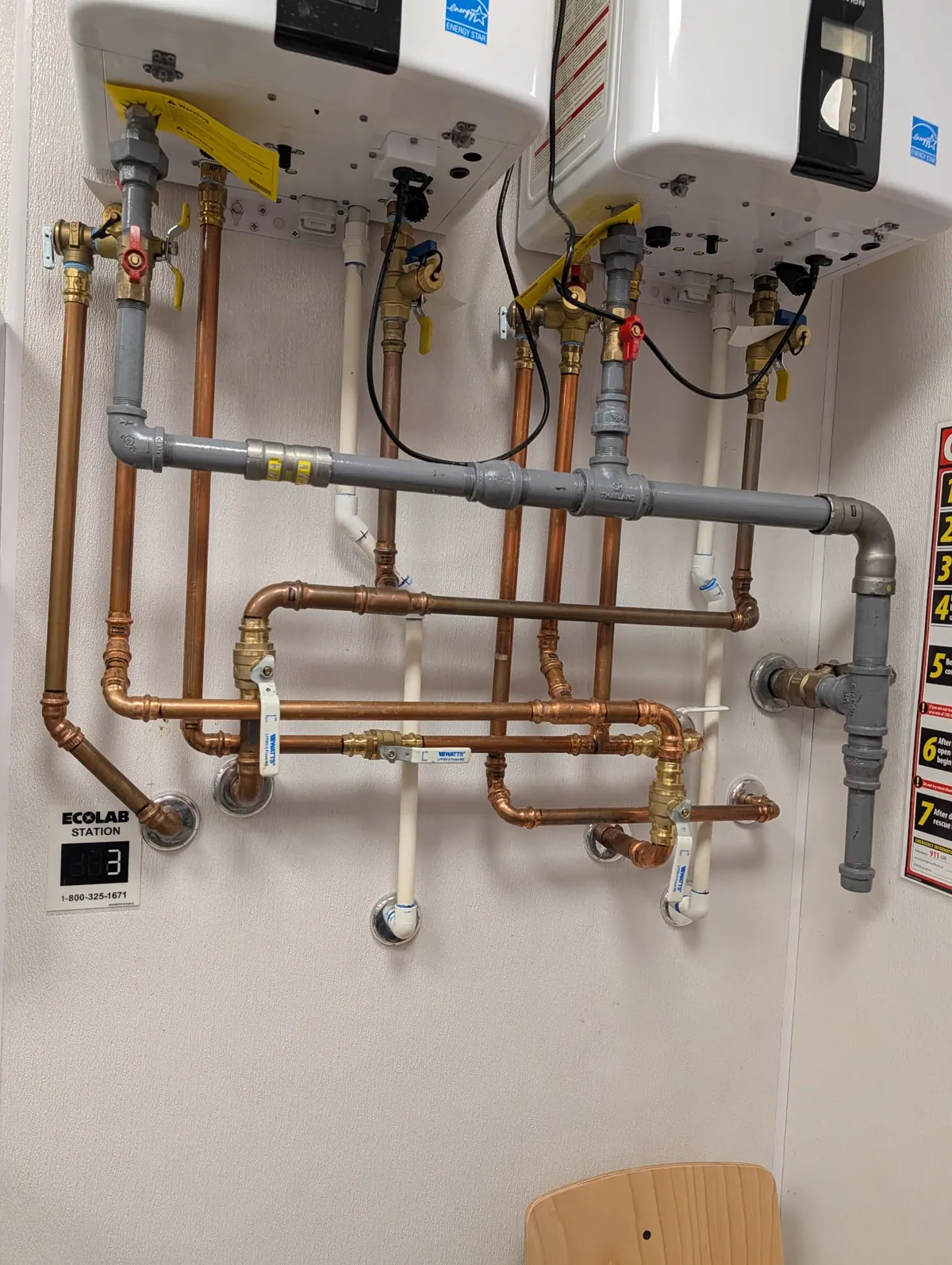


We provide water heater repair across Philadelphia and Bucks, Montgomery, Delaware and Chester counties.
If the tank itself is sound, most problems can be repaired. Failed elements, thermostats, relief valves, dip tubes and anode rods are all replaceable parts. If the tank is leaking from the body or rusted through at the bottom, it cannot be fixed and needs to be replaced. Age matters too: a heater past about 10 to 12 years is often a better candidate for replacement than repair.
Popping and rumbling usually mean sediment. Philadelphia area water carries minerals that settle on the bottom of the tank, and water trapped under that layer boils and pops as the heater fires. A flush can remove loose sediment and quiet the tank. If the layer has hardened for years, flushing helps less, and it may be a sign the heater is nearing the end of its life.
A rotten egg smell in hot water usually comes from a reaction between bacteria in the water and the magnesium anode rod inside the tank. It is common in heaters that sit unused or run at low temperatures. Replacing the anode with an aluminum zinc rod and flushing the tank typically fixes it. If cold water smells too, the issue is in the water supply, not the heater.
A dripping temperature and pressure relief valve means the valve is either worn out or doing its job because pressure or temperature is too high. Do not cap or plug it. We test the valve, check the temperature setting and look at whether your home needs a thermal expansion tank. Often the fix is a new valve and an expansion tank, which protects the heater and the plumbing.
Yes. We repair water heaters 24 hours a day, 7 days a week, because a leaking tank or no hot water in a Philadelphia winter cannot always wait. If the tank is leaking, close the cold water valve on top of the heater and turn off power to it, then call (518) 776-7838. We dispatch the nearest technician and give you an upfront quote before work starts.
Old, leaking or undersized water heater? We remove it, install a properly sized new tank and haul the old one away.
Water Heater Replacement detailsTankless water heater installation, repair and descaling for endless hot water and more room in tight basements and utility closets.
Tankless Water Heaters detailsWater softeners and filtration systems that cut hard water scale, protect water heaters and fixtures and improve water at the tap.
Water Softeners and Filtration detailsWe answer 24 hours a day, 7 days a week. Call and talk to a real person, or request service online and we will call you back.
Tell us what is happening. Our team usually calls back within two hours. Emergency? Call now, we answer 24/7.
Or call (518) 776-7838, 24 hours a day