Basement Floor Drain Cleaning
Basement floor drain, laundry drain and house trap cleaning that stops backups, standing water and sewer smells in Philadelphia basements.
Basement Floor Drain Cleaning details
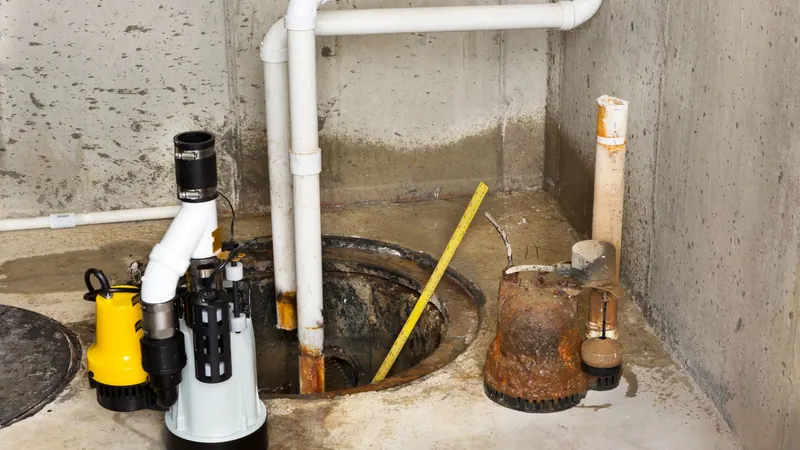
When a storm hits, your sump pump is the only thing between groundwater and your basement floor. We repair, replace and back up sump pumps so they work when it counts.
Quick answer: Before storm season, slowly pour a bucket of water into the sump pit. The float should rise, the pump should turn on, drain the pit and shut off. If it does not start, runs without moving water or keeps running after the pit is empty, it needs service. Also check that the discharge line outside is clear and draining away from the house.
A sump pump sits in a pit at the lowest point of a basement and pumps out groundwater that collects there, sending it outside before it can rise onto the floor. Sump pumps fail for predictable reasons: a stuck float switch, a burned out motor, a clogged intake, a broken check valve, a frozen or crushed discharge line, or a power outage during the storm that made them necessary. Most failures happen at the worst possible moment, during heavy rain. A pump that has not run in months can fail without warning.
We repair and replace sump pumps, install new pits where homes need them, add battery backup pumps for power outages and fix discharge lines so water goes far enough from the foundation. We size the pump to the pit and how much water comes in. A sump pump handles groundwater, but water coming up through a floor drain is a different problem. If your basement takes on water from a drain during storms, that points to the sewer side, and we can clean and inspect that line too. One visit can cover both.
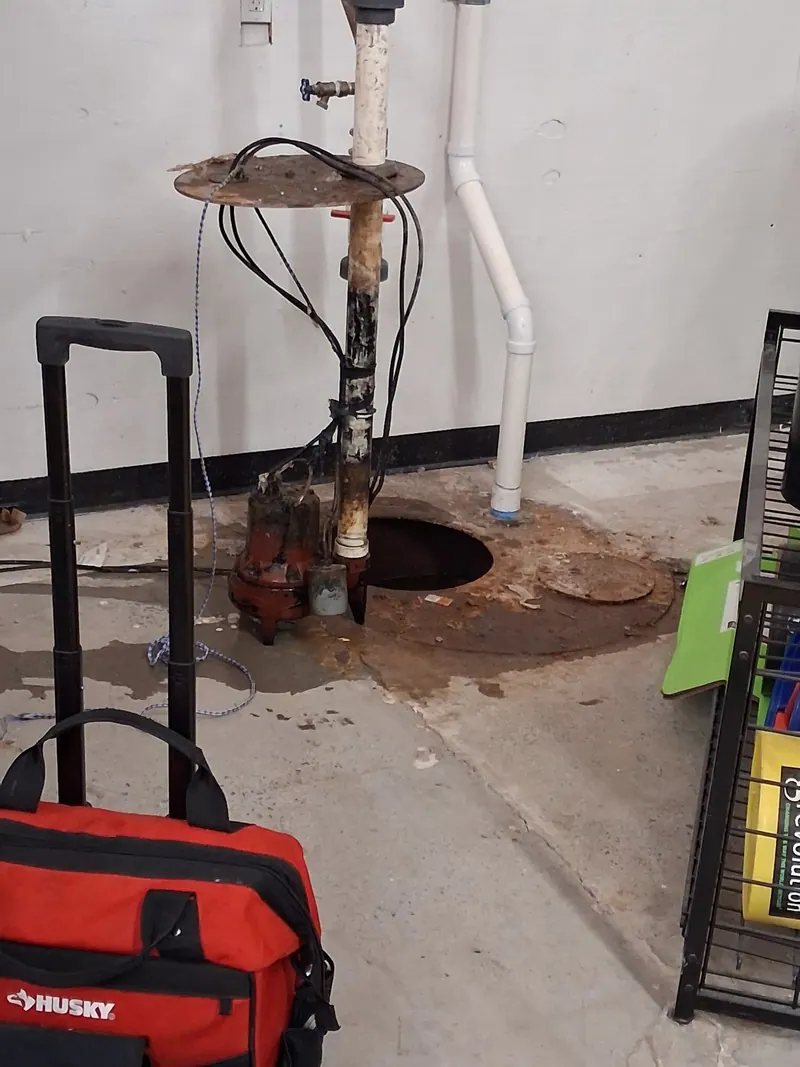
We fill the pit to trigger the float, watch the pump cycle and check the check valve and discharge line. We look at the age and condition of the pump and how much water the pit takes during wet weather.
We explain whether a float, check valve or discharge repair will do, or whether the pump should be replaced. We also talk about battery backup. You get an upfront quote for each option before any work starts. We tell you which repair will last.
We replace the pump or failed parts, clean the pit, install a new check valve and correct the discharge so water exits away from the foundation. Battery backup pumps are installed alongside the primary pump. Every joint is checked for leaks.
We run the full system, including the backup, and confirm water leaves the house properly. We show you how to test the pump yourself before storm season and clean up the work area. A quick test now prevents surprises later.
Sump pumps are most common in the suburbs. Homes in Bucks, Montgomery, Delaware and Chester counties with full basements, especially those near creeks or on lower ground, often depend on a sump pump to keep groundwater out. Spring storms and summer downpours bring the heaviest demand, and those are also when the power goes out. A battery backup pump keeps the basement dry when the primary pump loses power or fails, which is why we recommend one for finished basements. Homes near Pennypack Creek, Wissahickon Creek and other low areas can see high water tables after long rains, and their pumps may run for hours at a time.
In the city, many older rowhomes do not have sump pumps, and basement water often comes from a different source. Much of older Philadelphia is served by a combined sewer, so heavy rain can push water back toward low basement drains. A backwater valve and a clean, inspected sewer lateral address that. We help you figure out which kind of water problem you have so you invest in the right fix. Some homes need both a sump pump and backwater protection, and we explain which applies to yours.
Sump pump cost depends on whether the pump can be repaired, the type and size of pump, whether you add a battery backup, and the condition of the pit, check valve and discharge line. Installing a new pit where there is none involves breaking and patching the basement floor. Extending or rerouting a discharge line adds work. We test the system, explain the options and give you an upfront quote before any work starts.
Call (518) 776-7838 for an upfront quote. We answer 24/7 and explain the price before any work starts.
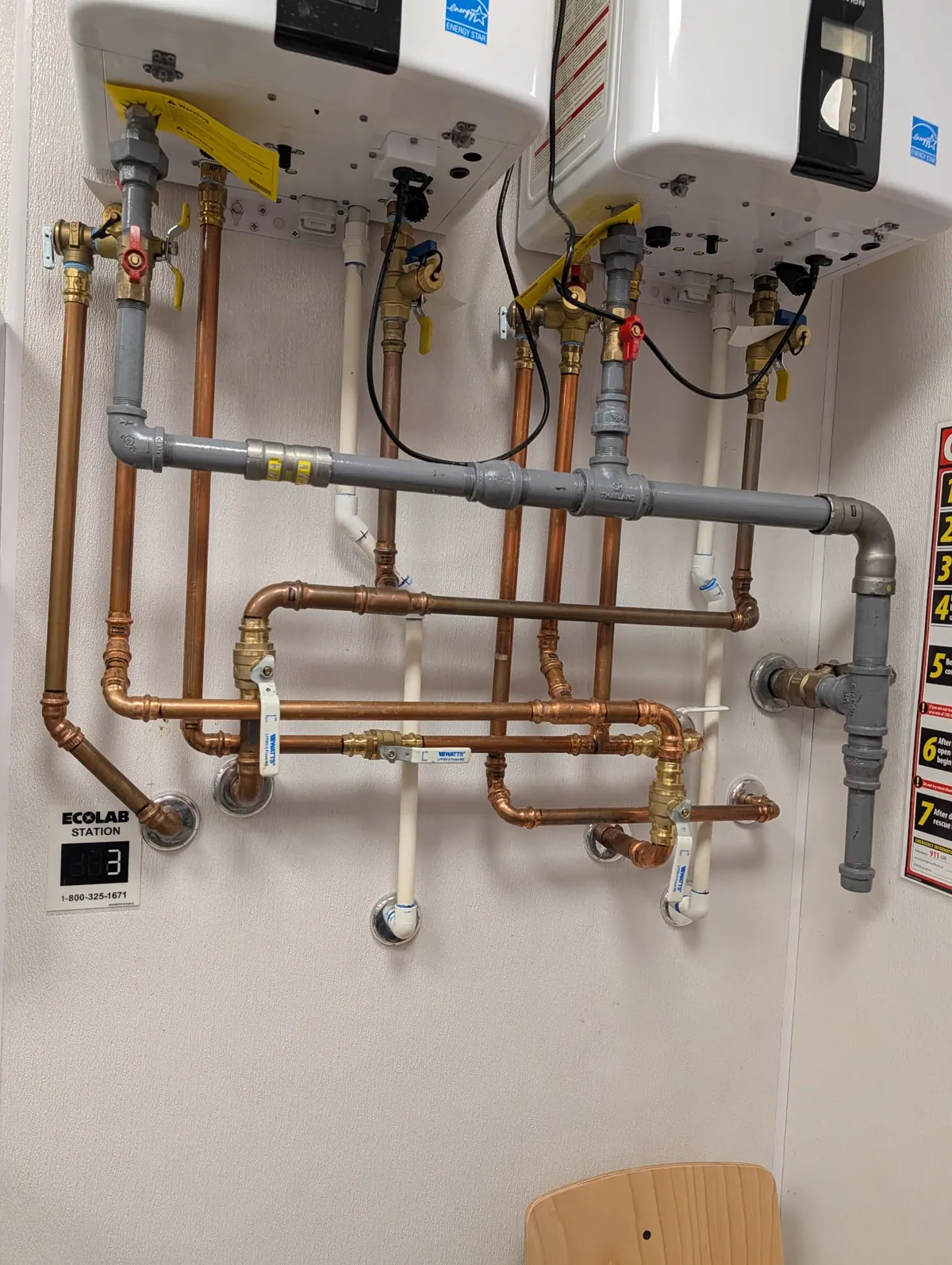
No stock photos here. These are our own technicians, our own equipment and real repairs.
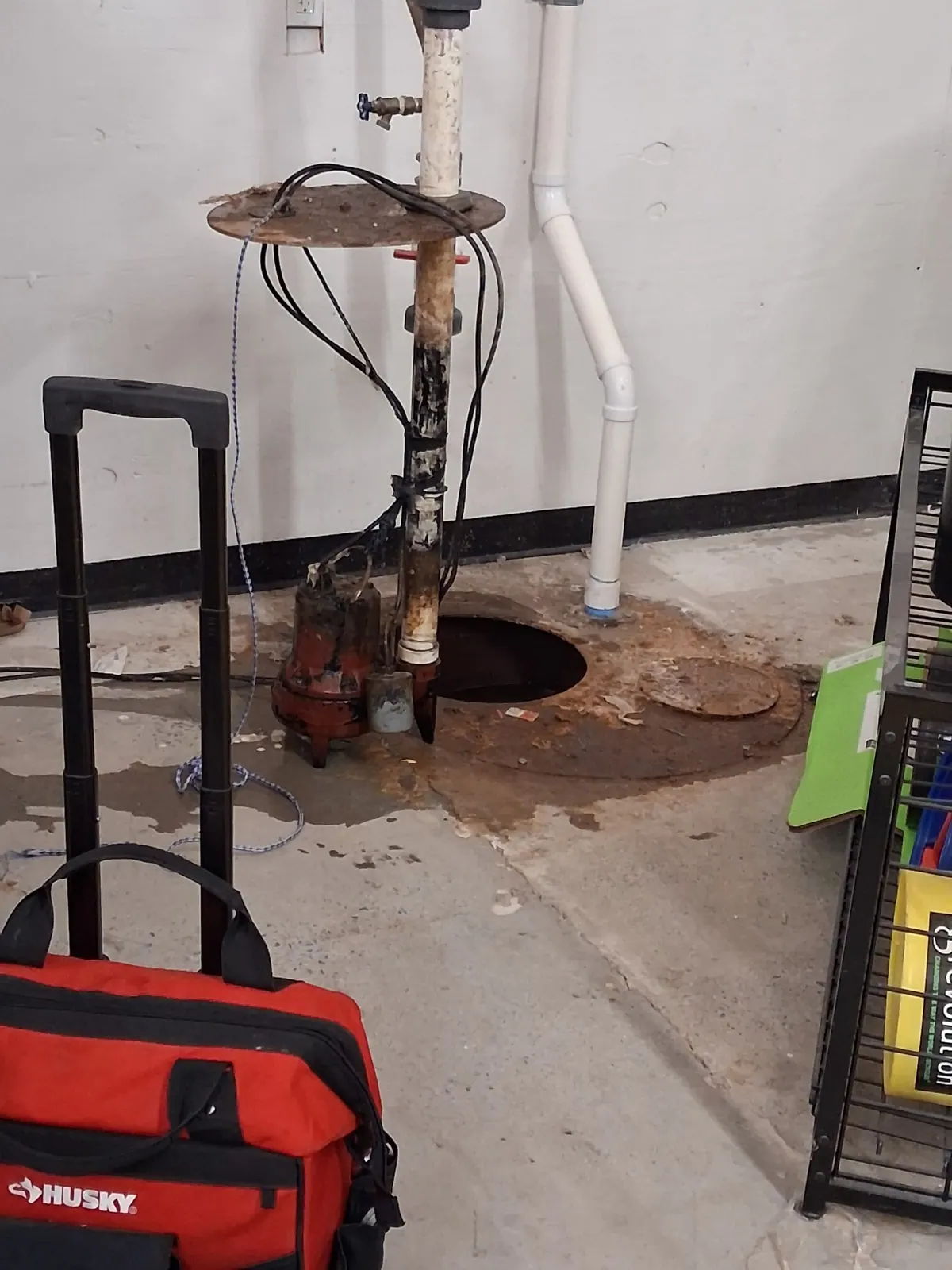
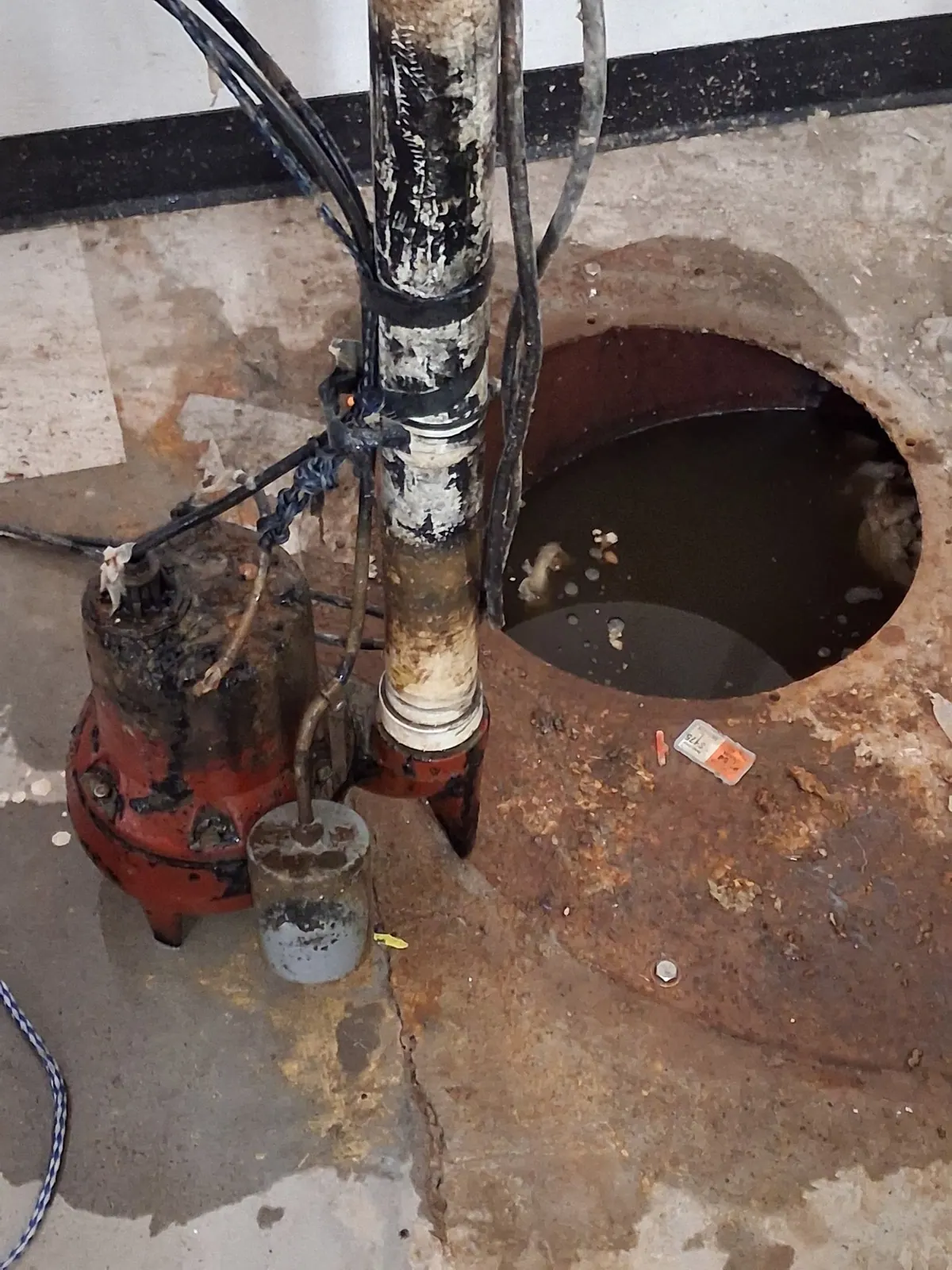

We provide sump pumps across Philadelphia and Bucks, Montgomery, Delaware and Chester counties.
Before storm season, slowly pour a bucket of water into the sump pit. The float should rise, the pump should turn on, drain the pit and shut off. If it does not start, runs without moving water or keeps running after the pit is empty, it needs service. Also check that the discharge line outside is clear and draining away from the house.
If your basement is finished or stores anything you care about, a battery backup is a smart addition. Heavy storms are when the power is most likely to go out and when your sump pump is most needed. A backup pump runs on battery when the primary pump loses power or fails, which can prevent a flooded basement.
Water coming up a floor drain is usually a sewer problem, not a sump pump problem. Much of older Philadelphia has a combined sewer that carries storm water and sewage together, and heavy rain can push water back toward low drains. A blocked lateral or house trap makes it worse. A backwater valve and drain cleaning address it.
Many sump pumps last around 7 to 10 years, depending on how often they run and the quality of the pump. Pumps in suburban basements with high water tables work hard every spring. If yours is older, noisy or slow, replacing it before storm season is cheaper than drying out a basement. Test it every few months.
The discharge line should carry water well away from the foundation, toward a spot where it drains away from your home and your neighbors. If it empties right next to the house, water just soaks back into the pit. Lines should be clear of debris and protected from freezing in winter. We can extend or reroute it.
Basement floor drain, laundry drain and house trap cleaning that stops backups, standing water and sewer smells in Philadelphia basements.
Basement Floor Drain Cleaning detailsStop a sewer backup, clear the line and clean up the plumbing mess, with help preventing storm backups from the combined sewer.
Sewer Backup Service detailsClear storm drains, catch basins, yard drains, french drains, downspout lines and rowhome areaway drains before the next big rain.
Storm and Outdoor Drain Cleaning detailsWe answer 24 hours a day, 7 days a week. Call and talk to a real person, or request service online and we will call you back.
Tell us what is happening. Our team usually calls back within two hours. Emergency? Call now, we answer 24/7.
Or call (518) 776-7838, 24 hours a day